A breakdown of environmental, social and governance (ESG) risks
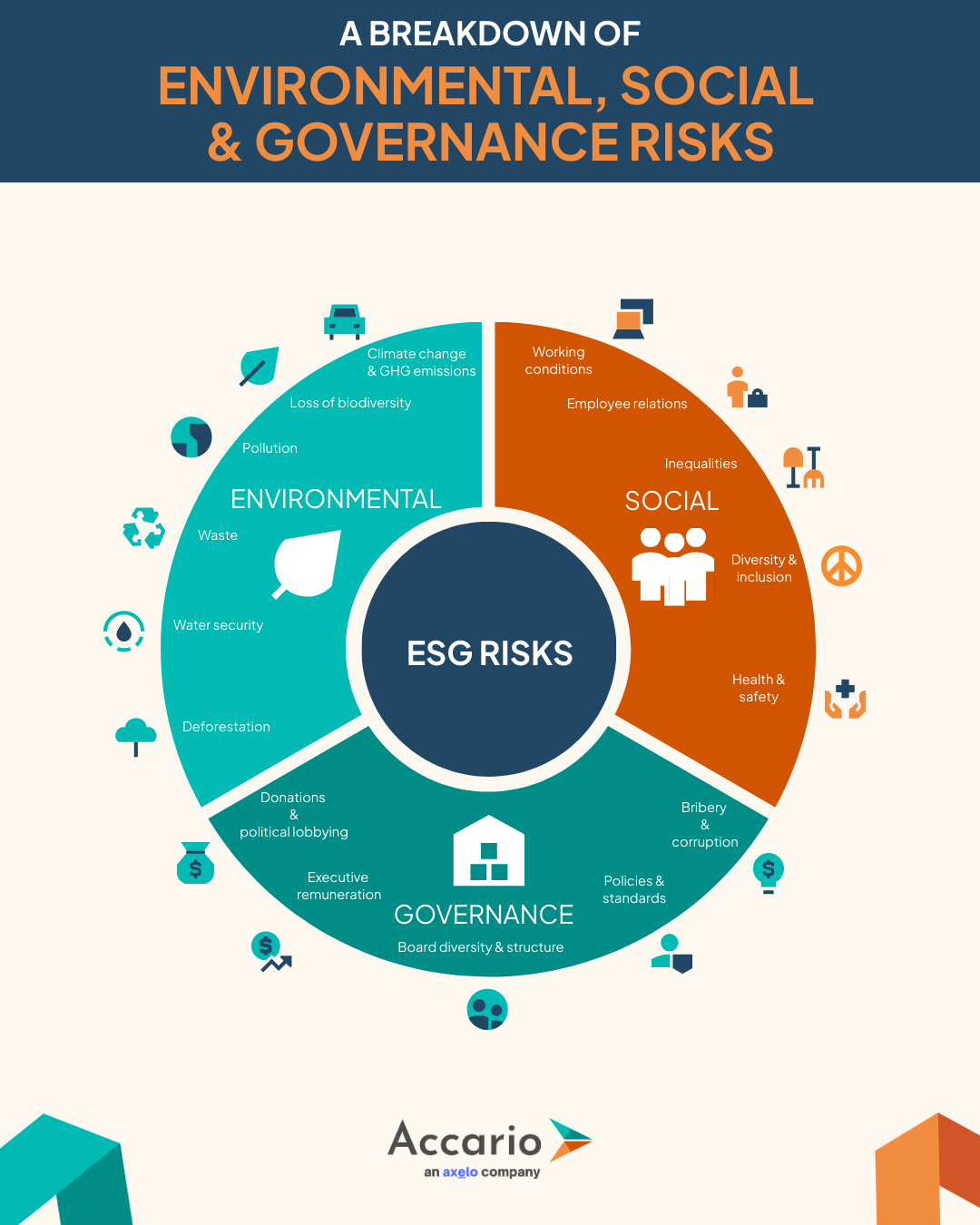
Businesses today are expected to manage more than just revenue and profit. How they impact the environment, treat people, and run their operations now plays a direct role in long-term success.
These areas are captured under Environmental, Social, and Governance (ESG) risks.
While many organisations still view ESG as a reporting requirement, the reality is different. ESG risks are operational. They affect cost, performance, compliance, and reputation. When they are not managed properly, they create operational gaps such as inconsistent processes, poor data visibility, and delayed decision-making.
Understanding ESG is not about adding complexity. It is about gaining better control over how the business operates.
What are ESG risks
ESG risks refer to non-financial factors that can influence a company’s performance.
They fall into three key areas:
- Environmental: How a business impacts the environment
- Social: How a business manages relationships with people
- Governance: How a business is directed and controlled
These risks are interconnected. Weak governance can lead to environmental failures. Poor social practices can damage reputation and reduce employee performance. Environmental issues can disrupt supply chains and increase costs.
Businesses that treat these areas separately often miss how risk actually builds.
Environmental risks: managing impact and resources
Environmental risks focus on how business activities affect the planet and natural resources. As regulations tighten and expectations increase, these risks are now actively monitored by regulators, investors, and customers.
Common environmental risks include:
- Climate change and greenhouse gas emissions
Businesses are under pressure to measure, manage, and reduce emissions. Without consistent data tracking, reporting becomes inaccurate, increasing the risk of penalties and rework. - Loss of biodiversity
Declining ecosystems can disrupt supply chains, especially for businesses that rely on natural resources. - Pollution
Poor control over emissions and waste can lead to fines and reputational damage. - Waste management
Inefficient processes increase operational costs and environmental impact. - Water security
Limited access to water can affect production and continuity in certain industries. - Deforestation
Unsustainable sourcing practices can create both compliance and brand risks.
Environmental risks often show up as rising costs, supply chain issues, or regulatory pressure. Without clear visibility, businesses react after issues have already impacted operations.
Social risks: people, culture and reputation
Social risks focus on how a business treats its employees, customers, and the wider community. They often build gradually through disengagement, poor culture, or weak leadership before escalating quickly.
Common social risks include:
- Working conditions
Poor conditions reduce productivity and increase legal exposure. - Employee relations
Weak engagement and communication lead to higher turnover and lower performance. - Inequality
Unfair practices can damage trust internally and externally. - Diversity and inclusion
Lack of diversity limits perspectives and makes it harder to attract talent. - Health and safety
Workplace incidents create financial, legal, and reputational consequences.
Social risks directly impact how teams perform. When not managed properly, they affect productivity, culture, and long-term retention.
Governance risks: structure, control and accountability
Governance risks sit at the centre of ESG because they determine how effectively a business is directed and how well it manages environmental and social challenges.
Common governance risks include:
- Board diversity and structure
Limited perspectives can lead to poor decision-making. - Policies and standards
Without clear guidelines, teams operate inconsistently, increasing risk. - Bribery and corruption
Uncontrolled environments expose businesses to serious legal and financial consequences. - Executive remuneration
Poorly aligned incentives can drive short-term decisions. - Political donations and lobbying
Lack of transparency can raise concerns about integrity.
Strong governance helps people understand what is expected and who is responsible. Without it, risks across the business become harder to control.
Why ESG risk management matters
ESG risks are no longer indirect. They are already shaping how businesses operate day to day.
When these risks are not managed, the impact is immediate. Businesses face regulatory pressure, operational disruption, rising costs, and loss of trust. Reputation can decline quickly, and recovery is often expensive.
When ESG risks are managed well, businesses gain better control and operate more consistently. Businesses build stronger relationships with stakeholders, create a more stable foundation for growth, gain credibility with investors, and respond to change more effectively.
ESG is not just about compliance. It is about maintaining control, protecting performance, and supporting long-term success.
Turning ESG into a business advantage
The challenge is not understanding ESG. It is embedding it into how the business actually runs. Leading businesses now treat ESG as a core part of their strategy.
Businesses that manage ESG well do not treat it as a separate function. They build it into their financial and operational processes.
This includes:
- Assigning clear ownership of ESG responsibilities
- Setting defined policies and standards
- Tracking ESG data consistently through financial and operational systems
- Aligning ESG considerations with decision-making
When businesses structure ESG properly, they gain better visibility. They identify risks earlier, respond faster, and operate more consistently.
Building a more resilient business
ESG risks are now part of everyday business decisions. They influence how organisations operate, grow, and maintain trust.
Businesses that take a structured approach to ESG position themselves to:
- Manage risk effectively
- Improve operational consistency
- Build stronger stakeholder relationships
- Adapt to changing regulatory environments
Businesses that do not take this approach often face higher costs, operational issues, and increasing pressure over time.
ESG is not just about responsibility. It is about control, consistency, and long-term performance.
When businesses understand and manage ESG risks properly, they create a more stable, efficient, and resilient organisation.
Today, that is not optional. It is essential for long-term success.
Follow Us


Most Popular


Are you ready
to get your time
back?
Yes! Accario will help you
focus on your business
More smarts, more efficiencies,
with more benefits.