Avoid Burnout with Smart Time Management

Burnout has become a modern epidemic, particularly in high-performance work environments. It manifests chronic fatigue, reduced productivity, irritability, and a feeling of being emotionally drained. One of the most effective ways to combat burnout is through smart time management. By structuring your day with intention, you can take control of your schedule rather than letting … Read more

Why Now Is the Best Time to Start Preparing for EOFY in Australia

As the calendar inches closer to 30th June, many Australian businesses and individuals begin to turn their attention to the End of Financial Year (EOFY). However, effective EOFY preparation should not be a last-minute scramble. Starting early can provide financial, operational, and strategic advantages that set the stage for long-term success. With the new calendar … Read more

Mastering Time Management with the 80/20 Rule

In a world that constantly demands more from us, managing time effectively is no longer just a nice-to-have thing, it is essential. Whether you are a professional in juggling deadlines or a company aiming to scale, the 80/20 Rule, also known as the Pareto Principle, can be your secret weapon to mastering productivity and achieving … Read more

How to Avoid Common Tax Compliance Mistakes in Your Business

Tax compliance is a critical responsibility for any business. Mistakes in tax filing, record-keeping, and reporting can lead to penalties, financial strain, and even legal complications. Whether you are running a small business or managing a growing enterprise, understanding common tax pitfalls and how to avoid them can save you time, money, and stress. Here … Read more

10 Reasons to Start an SMSF 

Self-managed superannuation funds (SMSFs) are becoming an increasingly popular choice for Australians who want greater control over their retirement savings. While starting an SMSF is a significant commitment, it offers unique advantages that can help you align your investment strategy with your financial goals. Here are 10 key reasons why an SMSF might be the … Read more

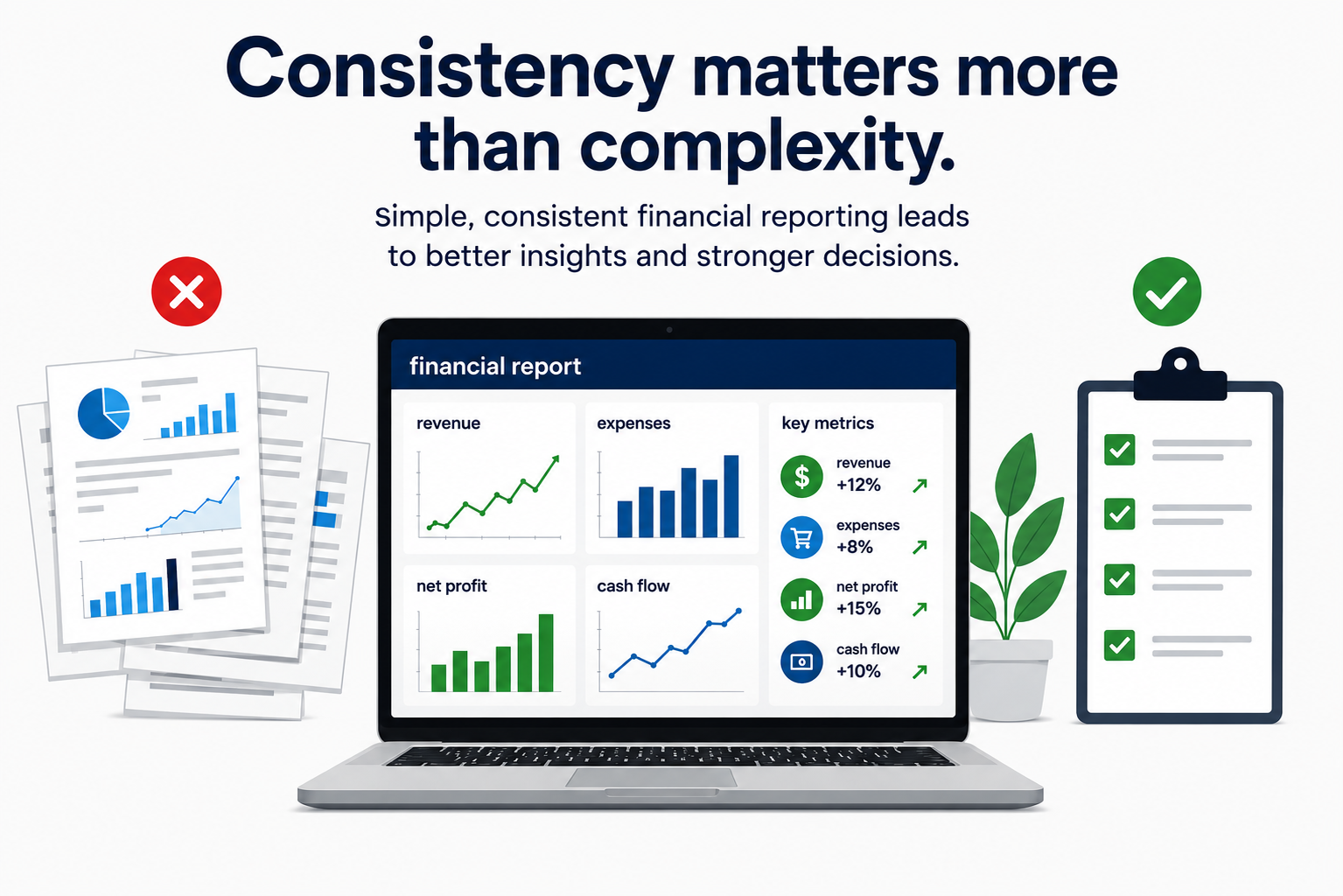
Why consistency matters more than complexity in financial reporting

Financial reporting helps businesses understand their performance, manage resources, and make informed decisions. However, more detail does not always lead to better insights. Finance teams can spend significant time creating complex reports with too many charts, technical terms, and large amounts of data. While these reports may appear impressive, they do not always help business … Read more

What every franchisor should know about financial consistency across their network

Running a successful franchise network involves much more than growing the number of locations. As the network expands, so does the complexity of managing financial information across multiple franchisees. Each location generates valuable financial data, but if that information is not reported consistently, it becomes difficult to understand how the business is truly performing. Many … Read more

How finance outsourcing changes decision-making speed in startups

Startups make important business decisions every day, from managing cash flow and hiring employees to securing funding, setting budgets, and investing in growth. To make these decisions with confidence, finance leaders need timely and accurate financial information. When financial insights are readily available, businesses can respond more quickly to opportunities, address challenges before they escalate, … Read more

Finance automation vs. finance expertise: Where should you draw the line?

Finance teams have never had access to more technology than they do today. Cloud accounting software, automated workflows, artificial intelligence (AI), and digital reporting tools have changed the way businesses manage their finances. Tasks that once took hours can now be completed in minutes. Transactions can be processed automatically, reports generated instantly, and approvals completed … Read more

Australia’s SMSF residential property borrowing ban

On 23rd June 2026, Australia changed its superannuation rules in a major way: Self-Managed Super Funds (SMSFs) can no longer use Limited Recourse Borrowing Arrangements (LRBAs) to buy residential property. Existing arrangements remain protected under grandfathering provisions, but the reform clearly changes how SMSFs can invest in residential real estate going forward. Policymakers framed this … Read more