How virtual assistants are transforming business operations
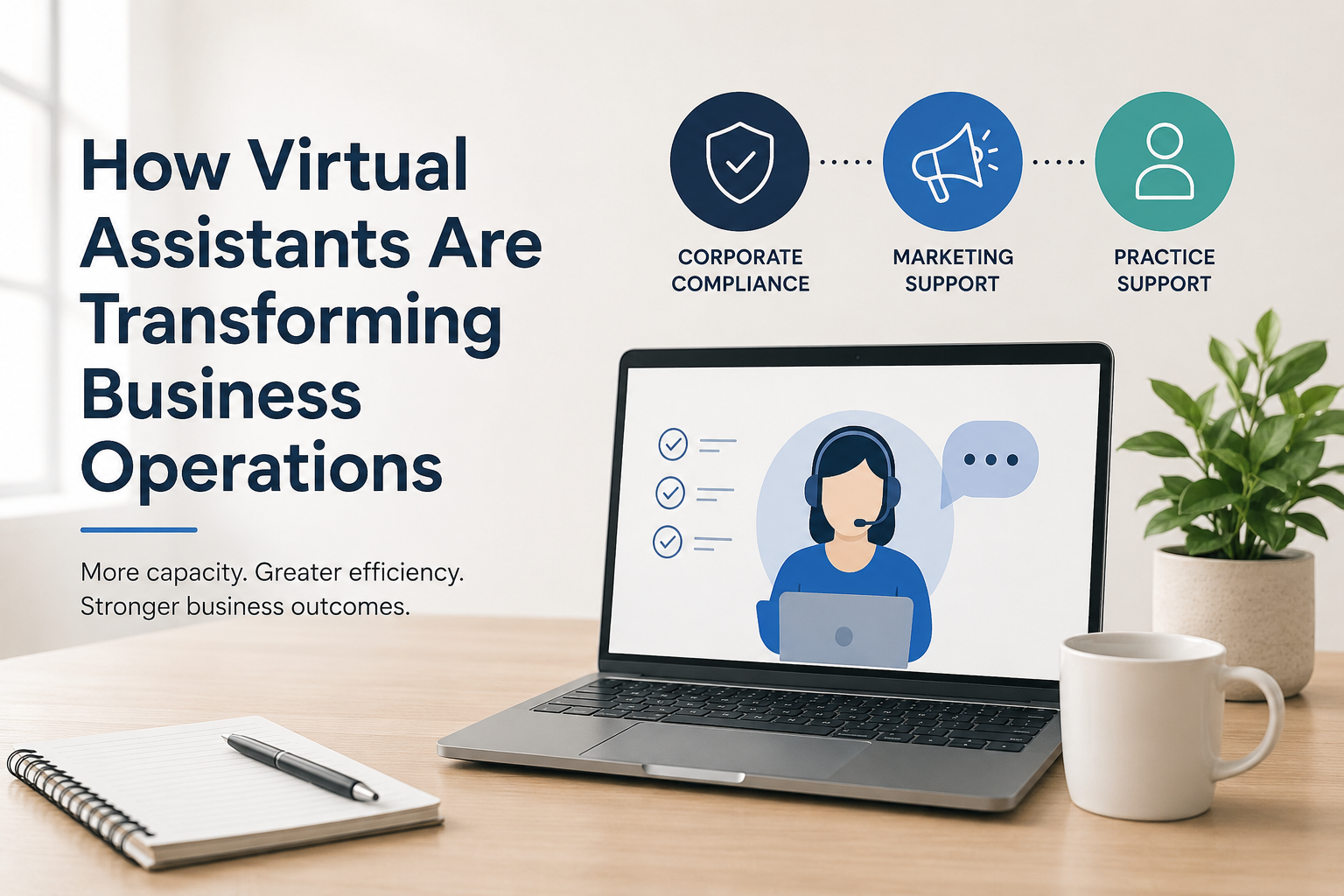
Businesses today face a common challenge.
As businesses grow, the amount of work often increases faster than the team can handle. Employees are expected to do more, respond faster, maintain quality, and meet compliance requirements without increasing costs.
At the same time, many businesses still rely on employees to manage a growing number of administrative and operational responsibilities alongside their core roles.
Scheduling meetings, responding to emails, updating databases, preparing reports, maintaining records, coordinating projects, managing compliance activities, and supporting marketing initiatives are all important tasks. However, these responsibilities consume valuable time that could otherwise be spent serving clients, solving business problems, improving performance, or driving growth.
As workloads continue to increase, many businesses find themselves facing a difficult balancing act. They need additional support, but they also need to maintain efficiency, control costs, and remain focused on their strategic objectives.
This challenge is one of the key reasons Virtual Assistants have become an increasingly important part of modern business operations.
Why businesses are turning to virtual assistants
The role of the Virtual Assistant has evolved significantly over recent years.
Today’s Virtual Assistants do far more than manage calendars or perform basic administrative work. Businesses increasingly use them as dedicated operational support resources that help manage day-to-day activities across multiple areas of the organisation.
Rather than adding more responsibilities to existing employees, businesses can allocate routine, administrative, and coordination-based activities to dedicated support professionals.
This creates several benefits.
Internal teams gain more time to focus on strategic priorities. Businesses improve responsiveness and consistency. Day-to-day operations become easier to manage. Leaders can spend more time focusing on clients, growth, and decision-making rather than administration.
For many organisations, Virtual Assistants provide a practical way to increase support without significantly increasing costs or complexity.
The hidden cost of administrative work
Administrative activities are essential to every business.
The challenge is not whether these tasks need to be completed. The challenge is who completes them.
Many organisations rely on highly skilled employees to manage activities such as inbox management, database maintenance, reporting, documentation, client communications, scheduling, and process coordination.
While these responsibilities are important, they often do not require the specialist expertise of senior employees.
When highly skilled staff spend large portions of their day managing routine tasks, businesses reduce the value they receive from those employees. Time that could be spent solving complex problems, supporting clients, developing new opportunities, or improving business performance becomes tied up in operational administration.
The impact can be significant.
Response times slow down. Productivity drops. Employees become stretched across multiple responsibilities. Important projects are often delayed while routine operational tasks take priority.
Over time, these challenges can affect both business performance and employee satisfaction.
Virtual Assistants help ease this pressure by providing dedicated support where it is needed most.
Where virtual assistants deliver the greatest impact
While Virtual Assistants can support many business functions, the greatest value often comes from supporting areas that require consistency, coordination, and ongoing administrative support.
Corporate compliance support
Compliance responsibilities continue to increase across many industries.
Managing company documentation, maintaining records, preparing filings, tracking deadlines, and meeting regulatory obligations requires ongoing administration and attention to detail.
As businesses grow, these activities can consume significant internal resources.
Virtual Assistants can support a range of compliance-related activities, helping businesses maintain accurate records, manage documentation, coordinate administrative requirements, and stay on top of important obligations.
This support helps businesses remain organised, reduce administrative pressure, and improve operational consistency.
Marketing support
Marketing often becomes difficult to maintain when operational workloads increase.
Many businesses understand the importance of maintaining visibility and engagement, but internal teams frequently struggle to find the time required to execute marketing activities consistently.
As a result, campaigns become inconsistent, content schedules become irregular, and opportunities to engage clients are missed.
Virtual Assistants can help support marketing operations through activities such as database management, content coordination, social media support, campaign administration, reporting, and other marketing-related tasks.
This support allows businesses to maintain marketing activity while allowing internal teams to remain focused on their primary responsibilities.
Practice support
Day-to-day operational administration can quickly become overwhelming.
Emails require responses. Reports need preparation. Databases need updating. Client information must remain accurate and accessible.
Individually, these tasks may seem small. Collectively, they consume a significant amount of time.
Virtual Assistants can provide support across a wide range of administrative activities including inbox management, executive support, task coordination, database maintenance, document preparation, and reporting.
By providing dedicated support across these functions, businesses can improve responsiveness, streamline workflows, and create greater capacity for more important work.
Supporting business growth
One of the greatest benefits of Virtual Assistants is their ability to support growth.
As organisations expand, operational workloads increase. More clients, projects, transactions, and stakeholders create additional administrative demands.
Without the right support structure, growth often places increasing pressure on internal teams.
Virtual Assistants provide businesses with a flexible way to handle growing workloads while maintaining efficiency and service quality.
This flexibility allows organisations to access additional support without continually expanding internal administrative functions.
As a result, businesses can pursue growth opportunities while maintaining operational effectiveness and service standards.
What makes virtual assistant support effective
Not all Virtual Assistant services are the same.
The effectiveness of operational support depends on the quality of the people, processes, training, and governance behind it.
Businesses should look beyond the tasks being performed and consider how support is delivered. Structured onboarding, documented processes, ongoing training, quality assurance measures, and clear responsibilities all play an important role in maintaining consistency and service quality.
The most effective Virtual Assistant arrangements operate as an extension of the business rather than a standalone resource.
This approach helps create stronger outcomes, improved reliability, and greater long-term value.
Turning operational pressure into growth capacity
Businesses are under increasing pressure to do more with existing resources.
Administrative workloads continue to grow. Client expectations continue to rise. Compliance requirements continue to evolve.
Virtual Assistants are helping businesses respond to these challenges by creating additional operational capacity, improving efficiency, and allowing internal teams to focus on higher-value activities. As organisations continue to look for ways to operate more effectively, Virtual Assistants are becoming an important part of building more flexible, responsive, and efficient business operations.
At Accario, we provide specialised Virtual Assistant services across three key operational areas: Corporate, Practice Support, and Marketing. Our teams support a wide range of activities, including company incorporations and restructures, company secretarial services, ASIC lodgments and compliance administration, executive and inbox management, CRM and database maintenance, report and document preparation, practice marketing support, social media and content creation, and campaign and design support.
Supported by structured onboarding, ongoing learning and development, multi-layer quality review processes, and ISO 9001:2015 and ISO 27001:2013 certified, we help businesses reduce operational pressure, improve efficiency, and maintain consistent service quality. Backed by more than 20 years of experience, we provide reliable operational support that adapts to our clients’ changing business needs.
Looking to create more capacity within your business? Contact us to learn how our Virtual Assistant services across Corporate Compliance, Marketing, and Practice Support can help streamline operations, improve efficiency, and give your team more time to focus on strategic growth.
Follow Us


Most Popular


Are you ready
to get your time
back?
Yes! Accario will help you
focus on your business
More smarts, more efficiencies,
with more benefits.