Getting SMSF administration right as complexity builds
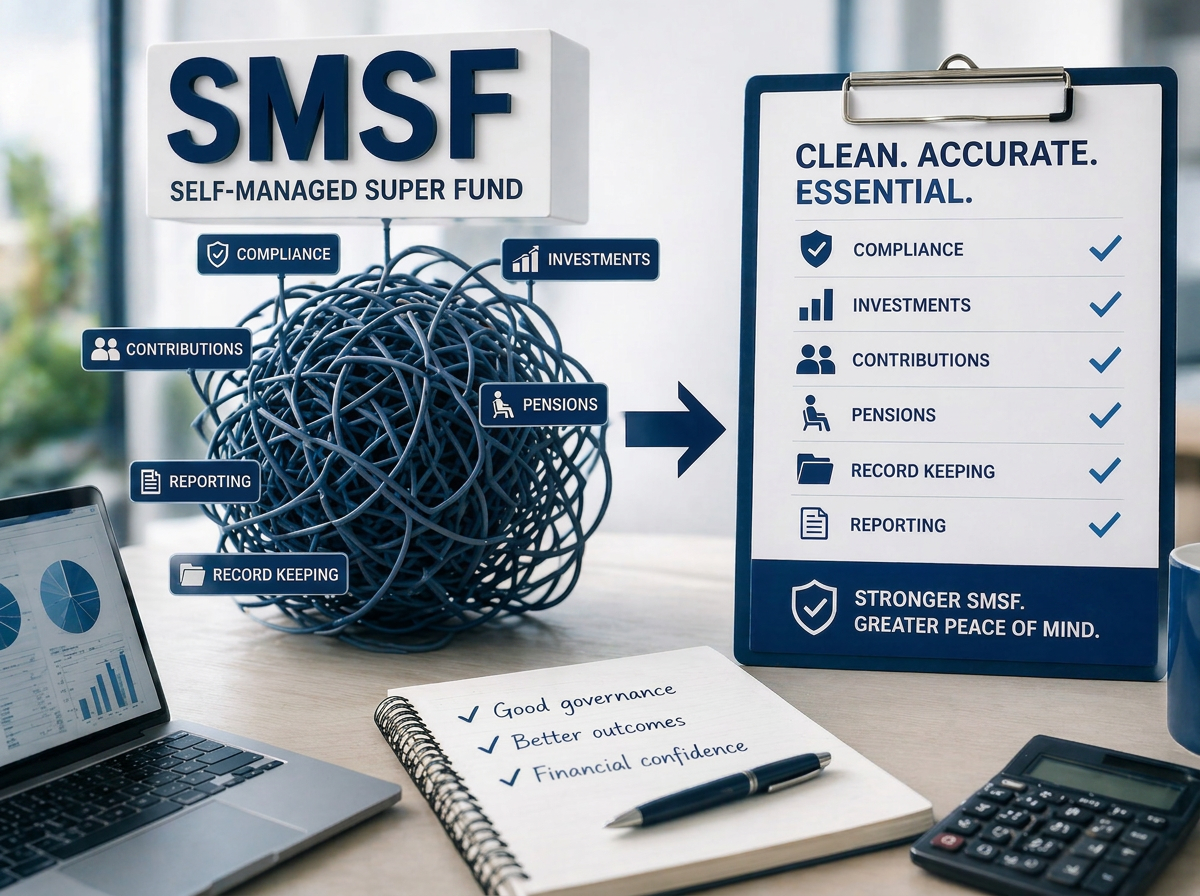
Self-managed super funds (SMSFs) give trustees control over their retirement savings. They can choose where to invest and plan based on their own goals.
Managing an SMSF is no longer just basic bookkeeping. Investment options have expanded, and compliance expectations are more detailed. This makes administration more complex, especially with digital assets like cryptocurrencies.
Because of this, keeping records clean and accurate is essential for compliance.
The foundation is already complex
SMSFs follow a clear set of rules. Trustees must make sure their fund follows superannuation and tax laws.
This means trustees need to:
- Keep accurate records for the required time
- Value all assets at market value each year
- Appoint an approved independent auditor
- Complete the audit before lodging the SMSF annual return
- Lodge the return on time with complete and accurate information
The Australian Taxation Office (ATO) regulates SMSFs. Financial advice and conduct are overseen by the Australian Securities and Investments Commission (ASIC). Larger super funds are supervised by the Australian Prudential Regulation Authority (APRA), not SMSFs.
Tax treatment also depends on whether the fund complies with the rules. Complying SMSFs receive tax benefits, including a one-third capital gains tax discount on assets held for more than 12 months. Non-complying funds pay tax at the highest rate.
If trustees do not meet their obligations, the impact can be serious. The ATO can apply penalties directly to trustees. It can also disqualify trustees or make the fund non-complying.
Complexity is increasing with investment choices
The rules for SMSFs stay the same, but the way funds invest is changing.
Many SMSFs now invest in a wider range of assets, including:
- International investments
- Private or unlisted assets
- Property structures
- Digital assets like cryptocurrencies
These assets often sit across different platforms and systems. This makes record-keeping harder and increases the chances of errors.
For tax purposes, the ATO generally treats cryptocurrencies as CGT assets rather than money. This means capital gains tax may apply when you sell crypto, swap one token for another, or use it in a transaction.
Trustees need to record each transaction separately. They must also convert values into Australian dollars at the time of each transaction and keep records for every movement.
For SMSFs, the expectations are higher. Trustees must make sure:
- The fund’s ownership of all crypto assets is clearly documented and kept separate from personal holdings
- Records support ownership and valuation
Some crypto activities, such as staking rewards and certain airdrops, may be treated as income when received, depending on the circumstances. Trustees need to identify and record these correctly.
Where administration becomes difficult
The real challenge is not understanding the rules. It is applying them consistently across multiple systems and asset classes.
An SMSF may hold assets in bank accounts, with brokers, in property, and across digital platforms. Each source produces different data. Trustees need to bring all of this together into one clear and accurate record.
Common issues include:
- Missing or duplicate transactions
- Inconsistent or unsupported valuations
- Poor records of ownership
- Errors in foreign exchange calculations
- Missing audit evidence
Regulators expect trustees to keep clear and reliable evidence. This includes proof of asset values and ownership. They also expect trustees to keep fund assets separate from personal assets.
If trustees cannot provide this evidence, the audit becomes harder. This can cause delays, extra work, and issues during the review process.
Strong administration functions as a control system
Strong SMSF administration is not something you do once a year. It is an ongoing process that helps with compliance, reporting, and decision-making.
A good process includes:
- Recording transactions regularly from all sources
- Classifying income, expenses, and capital gains correctly
- Reconciling balances on a regular basis
- Keeping records organised and complete
- Preparing year-end valuations with proper evidence
- Maintaining one central, audit-ready file
This approach helps reduce errors and keeps everything clear throughout the year. It also makes the audit process smoother because all information is ready and easy to access.
For funds with digital assets, this is even more important. Trustees need to clearly document wallet records, exchange statements, transfer histories, and valuation evidence.
Technology supports, but does not replace, process
Technology has improved SMSF administration. Platforms like Class, BGL, and SuperMate help automate data collection, reporting, and workflows.
These systems reduce manual work and help keep processes consistent. They also give a clearer view of fund activity.
For funds with digital assets, tools like Syla, Koinly, and Coinstash can help track transactions and support tax reporting.
Trustees still need to:
- Reconcile accounts regularly
- Review transactions carefully
- Classify income and gains correctly
- Keep proper records and supporting evidence
Technology works best when it supports a clear and structured workflow.
Trustees remain accountable
Even if trustees outsource administration, they still remain responsible for the SMSF.
The ATO clearly states that hiring a professional does not transfer responsibility. Trustees must make sure the fund follows all legal requirements.
ASIC also highlights that SMSF members are responsible for the decisions and risks of their fund, even when they receive advice.
This means trustees need to stay informed and make sure proper processes are in place.
A more disciplined approach
As SMSFs become more complex, administration needs to move beyond basic record-keeping.
It becomes a structured system that supports:
- Compliance with regulatory requirements
- Accurate and timely reporting
- Clear visibility of fund performance
- Efficient and smooth audits
Without this structure, small issues can build over time and create larger problems.
Managing an SMSF does not have to be overwhelming. At Accario, we provide end-to-end SMSF administration and audit support to help ensure your fund stays compliant, accurate, and audit-ready. Contact us to find out how we can support your SMSF.
References
- T. Office;, “Seek professional SMSF advice | Australian Taxation Office,” Ato.gov.au, 2025. https://www.ato.gov.au/individuals-and-families/super-for-individuals-and-families/self-managed-super-funds-smsf/before-you-start-an-smsf/seek-professional-smsf-advice
- “Tips for giving self-managed superannuation fund advice | ASIC,” Asic.gov.au. https://www.asic.gov.au/regulatory-resources/financial-services/giving-financial-product-advice/tips-for-giving-self-managed-superannuation-fund-advice/
Follow Us


Most Popular


Are you ready
to get your time
back?
Yes! Accario will help you
focus on your business
More smarts, more efficiencies,
with more benefits.