The financial blind spots that hold businesses back
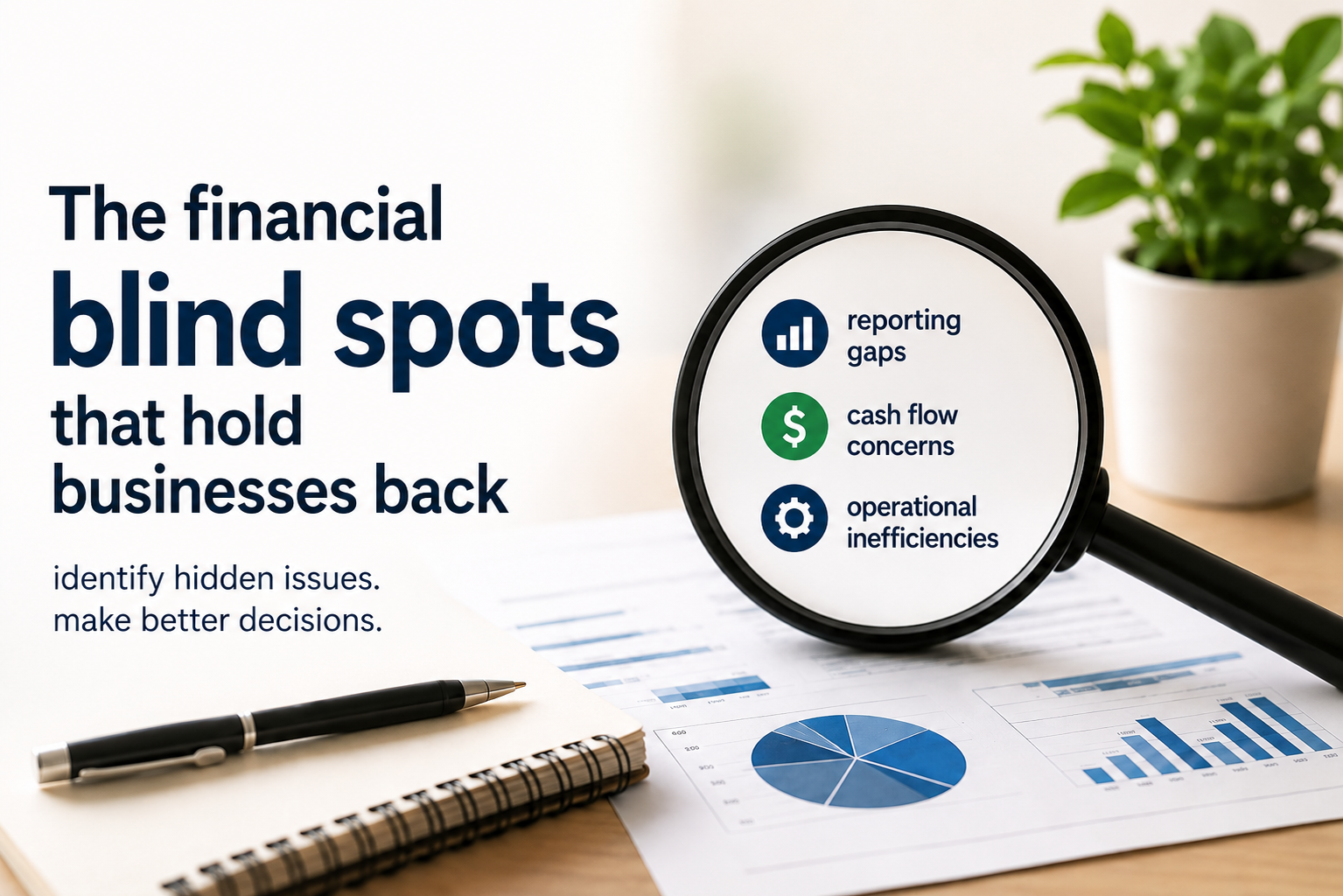
Financial problems do not always arrive with an obvious warning.
More often, they develop gradually. A reporting delay becomes normal. Expenses increase slightly each month. Receivables take longer to collect. A manual process starts consuming more time as transaction volumes grow. None of these issues may appear serious on their own, but together they can weaken financial visibility and make it harder to manage the business effectively.
These are financial blind spots: areas of the business that leaders cannot clearly see or understand because the right information is missing, delayed, incomplete or difficult to interpret.
The challenge is that a business can appear to be performing well while these issues develop in the background. Revenue may be growing and the business may be profitable, but that does not necessarily mean its cash position, cost structure or financial processes are healthy.
The earlier a business identifies these gaps, the more opportunity it has to respond before they become larger problems.
Why financial blind spots develop
Financial blind spots often appear as businesses become more complex.
A small business may begin with straightforward bookkeeping, a limited number of transactions and simple monthly reporting. As it grows, the number of invoices, bills, employees, accounts, systems and financial processes can increase.
Processes that worked at a smaller scale may no longer provide the same level of control or visibility.
Finance teams can also become focused on completing immediate tasks such as processing transactions, reconciling accounts, managing payroll and preparing reports. When workloads increase, finance teams may have less time to review changes in revenue, expenses and cash flow, investigate unexpected figures, or improve inefficient processes.
The financial information may still be accurate, but it may not give leaders a complete picture of what is happening across the business.
Management may know what happened last month but not why it happened or how it could affect the business going forward.
Reporting that arrives too late
Financial reporting is useful when decision-makers receive accurate information at the right time.
If management reports arrive several weeks after the end of a reporting period, leaders are making decisions based on information that may no longer reflect current conditions.
The same problem occurs when reports change significantly from one period to another. Inconsistent categories, metrics or reporting structures can make comparisons more difficult and hide important trends.
Good reporting should help management understand performance, financial position and cash movement. Reviewing financial reports regularly can help businesses identify trends and make more informed decisions.
For example, a small increase in operating expenses may not seem important at first. But if costs continue to rise over several months, consistent reporting makes the change easier to spot.
Visibility comes from having reliable information and being able to compare it over time.
Profit can hide cash flow pressure
One of the most important financial blind spots is the difference between profit and cash.
A business can report a profit while still experiencing cash flow pressure. Revenue may have been recognised, for example, while the related invoices remain unpaid. At the same time, the business still needs cash to meet payroll, pay bills and meet other financial commitments.
Looking at profit alone therefore does not provide a complete picture of financial health.
Cash flow forecasting can provide greater visibility by estimating when money is expected to enter and leave the business. This can help management identify potential cash shortages before they become immediate problems.
Regularly comparing forecasts with actual results can show where expectations differ from reality, such as invoices being paid later than expected or costs being higher than planned.
This gives management more time to respond rather than identifying a cash flow problem when a payment is already due.
Small cost increases can become significant
Not every financial problem comes from a major unexpected expense.
Costs often increase gradually.
Software subscriptions may accumulate. Service fees may rise. Duplicate or unnecessary expenses may remain unnoticed. Processes that require significant manual work can also become more expensive as transaction volumes increase.
Individually, these changes may appear minor. Across an entire business and over several months, they can place increasing pressure on margins.
Regular financial reviews help management compare costs over time and identify areas where expenses are higher than expected.
The goal is not simply to reduce spending. It is to understand where money is going and whether that spending continues to support the business effectively.
Without this visibility, management may focus on growing revenue while overlooking increasing costs that are reducing the benefit of that growth.
Manual processes can hide operational problems
Financial blind spots are not limited to the numbers themselves. They can also exist within the processes used to produce those numbers.
As a business grows, manual data entry, spreadsheets, unclear approval processes and systems that do not work together can make financial tasks harder to manage.
These processes may require additional checking, increase administrative work and make it harder to maintain a clear view of financial information.
Another warning sign is when financial knowledge sits with only one or two people. If a process depends heavily on an individual’s knowledge rather than a documented workflow, continuity can become difficult when workloads increase or responsibilities change.
Reviewing how financial information moves through the business can help identify unnecessary steps, duplicated work and areas where stronger processes could improve efficiency.
Better financial visibility therefore requires more than better reports. It also requires reliable processes behind those reports.
Budgets lose value when they are not reviewed
Creating a budget is only the beginning.
A budget becomes much more useful when actual performance is compared with expectations.
If revenue falls below forecast, costs rise above budget or cash movements differ significantly from expectations, management needs to understand why.
Some variances will have straightforward explanations. Others may reveal changing business conditions or issues that require attention.
Regularly comparing the budget with actual results helps management understand what has changed and decide whether forecasts, spending or business plans need to be adjusted.
Without regular reviews, a budget can quickly become outdated and less useful for making business decisions.
Better visibility supports earlier decisions
The greatest risk created by financial blind spots is not simply missing information. It is delayed action.
When leaders cannot see a developing issue, they cannot respond to it.
By the time the problem becomes obvious, the business may have fewer options available. A manageable cash flow gap may have become urgent. A gradual increase in costs may have affected margins for several months. A reporting problem may have delayed an important decision.
Strong financial management creates an early-warning system.
Better financial visibility does not require more reports or complicated dashboards. It comes from accurate records, consistent reporting, clear cash flow forecasts and regular financial reviews.
The objective is simple: understand what is happening early enough to do something about it.
Turning financial blind spots into clearer decisions
Financial visibility improves when businesses have the right processes, people and reporting structure working together.
Accario provides structured finance, accounting and back-office support to help businesses manage their financial operations more effectively. From bookkeeping and accounting support to financial reporting and broader finance services, our experienced teams work within your existing systems and processes to provide the support your business needs.
As businesses grow, the goal should not be to wait until a financial issue becomes impossible to ignore. It should be to create processes that make important changes easier to identify in the first place.
When financial information is accurate, timely and consistently reviewed, business leaders can identify concerns earlier, understand what is driving performance and make decisions based on a clearer picture of the business.
Learn how to identify financial blind spots before they affect your business. Do not let financial blind spots slow your business down. Contact us today to build clearer financial processes, improve visibility and make better-informed decisions.
Follow Us


Most Popular


Are you ready
to get your time
back?
Yes! Accario will help you
focus on your business
More smarts, more efficiencies,
with more benefits.