Understanding the Hierarchy of Financial Needs
Managing money can feel confusing. Many people do not know where to start, whether to save, invest, or pay off debt first.
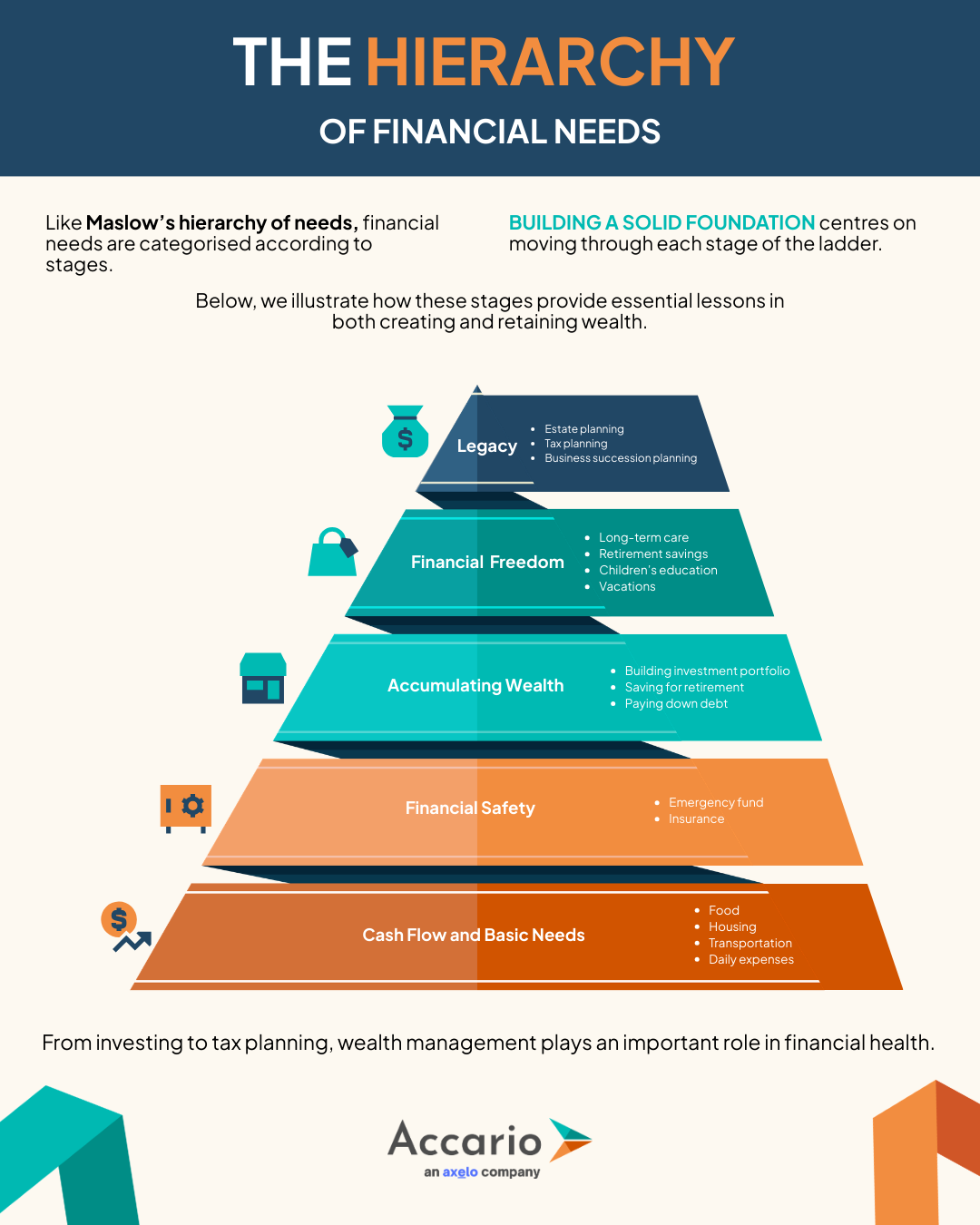
A helpful way to think about money is through the Hierarchy of Financial Needs. This idea is similar to Maslow’s hierarchy of needs, but instead of human needs like food or safety, it focuses on financial priorities.
The concept is simple:
Build your finances step by step, starting with the most essential needs first.
Each level creates a stronger foundation for the next.
Let us walk through the five levels of financial growth.
1. Cash flow and basic needs (the foundation)
The bottom of the pyramid is the most important because everything else depends on it.
At this stage, your goal is to cover your essential daily expenses.
This includes:
- Food
- Housing (rent or mortgage)
- Transportation
- Utilities
- Daily living expenses
If your income does not cover these basics, it becomes difficult to focus on saving or investing.
Goal at this stage:
Make sure your income is enough to consistently cover your basic living costs.
Helpful steps:
- Create a simple monthly budget
- Track your spending
- Avoid unnecessary debt
Once your basic needs are stable, you can move to the next level.
2. Financial safety
After covering daily expenses, the next step is protecting yourself from financial emergencies.
Life is unpredictable. Unexpected events like job loss, medical bills, or car repairs can happen at any time.
Two important steps create financial safety:
Emergency Fund
This is money set aside specifically for emergencies.
Financial experts usually recommend saving 3-6 months of living expenses.
Insurance
Insurance protects you from large financial losses. Examples include:
- Health insurance
- Life insurance
- Property or renter’s insurance
Many people skip this step, but it is extremely important. However, many people still lack enough savings to cover three months of expenses.
Goal at this stage:
Build a financial safety net so unexpected problems do not destroy your finances.
3. Accumulating wealth
Once your financial base is secure, you can begin growing your money.
This stage focuses on building assets and reducing debt.
Key priorities include:
- Paying down high-interest debt
- Saving for retirement
- Building an investment portfolio
Investing allows your money to grow over time through compound growth.
Examples of investments:
- Retirement accounts
- Stocks
- Index funds
- Real estate
The earlier you start investing, the more time your money has to grow.
Goal at this stage:
Make your money work for you, not just rely on your paycheck.
4. Financial freedom
Financial freedom means you have enough resources to support the life you want.
You are no longer just surviving financially, you are planning your future and lifestyle.
This stage often includes:
- Long-term retirement savings
- Funding children’s education
- Planning major life experiences like travel
- Preparing for long-term care
At this point, financial stress is much lower because your income, savings, and investments are working together.
However, many people still struggle to feel fully prepared for retirement.
Goal at this stage:
Create financial stability that supports your long-term life goals.
5. Legacy (the top of the pyramid)
The final stage focuses on what happens to your wealth after your lifetime.
This stage is about protecting your assets and passing them on wisely.
Common legacy planning steps include:
- Estate planning
- Tax planning
- Business succession planning
- Creating trusts or wills
Legacy planning ensures your money goes where you want it to go and helps reduce legal or tax complications for your family.
Goal at this stage:
Use your wealth to create a lasting impact for future generations.
Why the financial hierarchy matters
Many people make financial mistakes because they skip steps.
For example:
- Investing before building an emergency fund
- Trying to build wealth while drowning in debt
- Ignoring insurance protection
The hierarchy helps you focus on the right financial priorities at the right time.
Instead of doing everything at once, you move step by step:
- Cover basic needs
- Build financial safety
- Grow your wealth
- Achieve financial freedom
- Create a lasting legacy
Each level strengthens your financial foundation.
Financial success is not about getting rich overnight. It is about building stability over time.
By following the hierarchy of financial needs, you create a clear path:
Start with the basics → protect yourself → grow your wealth → enjoy financial freedom → leave a legacy.
No matter where you are today, the most important step is simply starting and moving forward one level at a time.
Follow Us


Most Popular


Are you ready
to get your time
back?
Yes! Accario will help you
focus on your business
More smarts, more efficiencies,
with more benefits.