Avoid Burnout with Smart Time Management
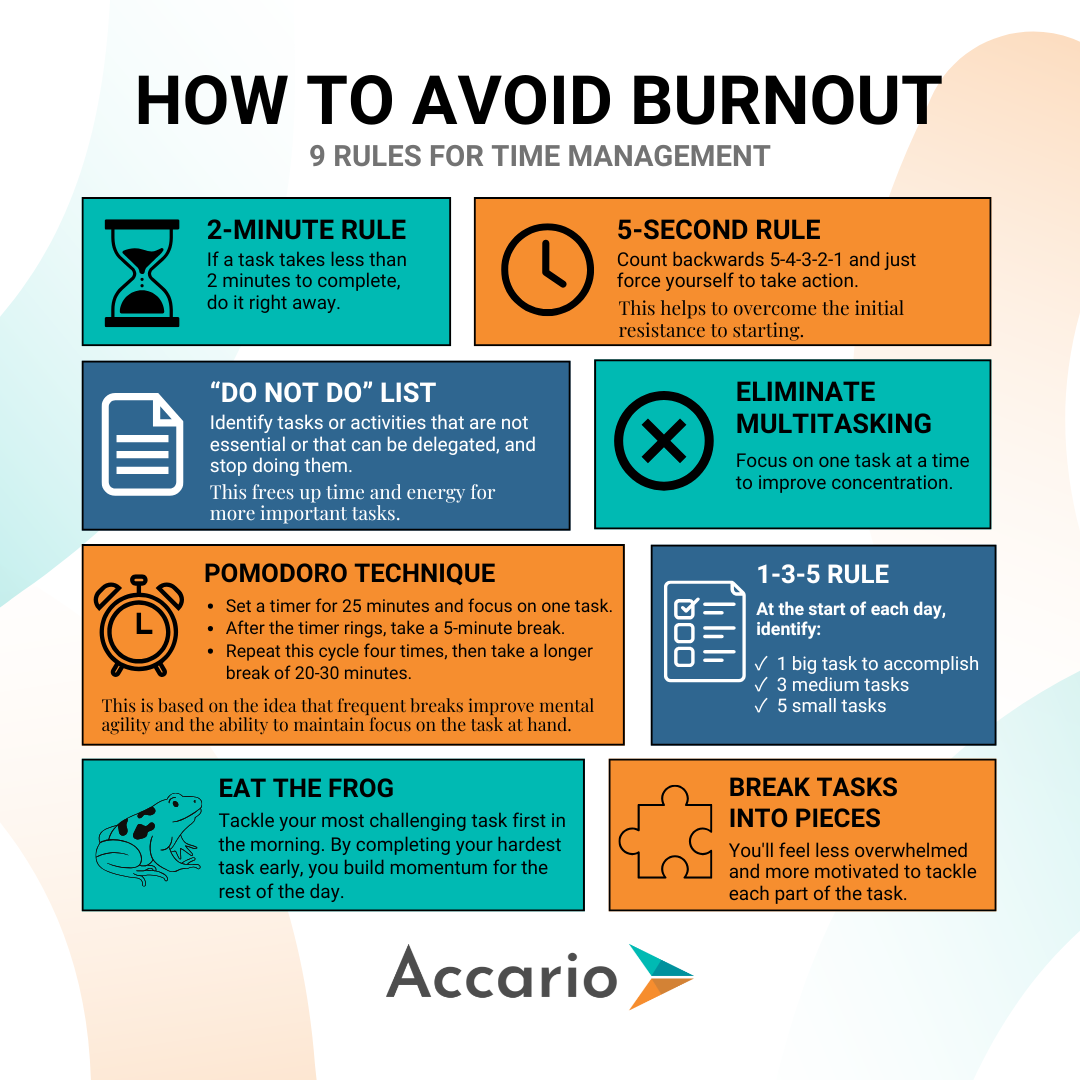
Burnout has become a modern epidemic, particularly in high-performance work environments. It manifests chronic fatigue, reduced productivity, irritability, and a feeling of being emotionally drained. One of the most effective ways to combat burnout is through smart time management. By structuring your day with intention, you can take control of your schedule rather than letting it control you.
Below are eight evidence-based time management strategies designed to help you avoid burnout and work more sustainably.
1. The 2-Minute Rule
If a task takes less than two minutes to complete, do it immediately. This technique, made popular by productivity expert David Allen, helps prevent small jobs from accumulating into an overwhelming backlog. Whether it is replying to a short email, filing a document, or washing your coffee cup, taking immediate action frees up mental space and gives you a sense of accomplishment early in your day.
Real-life example: Imagine you receive a calendar invite that requires no changes. Accepting it on the spot instead of leaving it unread prevents inbox clutter and decision fatigue.
2. The 5-Second Rule
Developed by author Mel Robbins, the 5-Second Rule is a psychological tool that encourages you to count backwards — 5, 4, 3, 2, 1 — and take action before your brain can talk you out of it. This simple countdown interrupts patterns of hesitation and helps you overcome procrastination.
Practical tip: Use this rule when struggling to start tasks like making a difficult phone call or getting out of bed to begin your morning routine.
3. Create a “Do Not Do” List
Time management is not just about what you do, it is also about what you choose not to do. A “Do Not Do” list allows you to identify time-wasting or non-essential activities and make a conscious decision to eliminate or delegate them.
Try this: If you often attend meetings that have little relevance to your role, consider whether your presence is necessary. Could you receive a summary instead?
4. Eliminate Multitasking
Although multitasking might seem efficient, studies consistently show it reduces performance and increases mental fatigue. When you switch between tasks, your brain has to reorient itself, wasting cognitive resources and time.
Better approach: Batch similar tasks together. For instance, respond to all emails during a dedicated 30-minute block rather than intermittently throughout the day.
5. Use the Pomodoro Technique
This method involves working in focused intervals — typically 25 minutes — followed by a 5-minute break. After four cycles, take a longer break of 20–30 minutes. This technique promotes sustained focus while reducing the risk of cognitive burnout.
Improve on it: Use your breaks wisely. Stretch, walk, hydrate, or do a short mindfulness exercise instead of jumping into another screen-based activity.
6. Follow the 1-3-5 Rule
This rule helps you prioritise by categorising tasks into levels of effort:
- 1 large task
- 3 medium tasks
- 5 small tasks
This creates a realistic workload while ensuring you address both big-picture goals and daily maintenance tasks.
Example: Your big task might be writing a report, medium tasks could include client calls, and small ones may involve data entry or scheduling meetings.
7. Eat the Frog
The phrase, credited to Mark Twain, suggests you should tackle your hardest or most unpleasant task first thing in the morning. This builds momentum and reduces mental dread that can weigh down your entire day.
Insight: Hard tasks require the most mental energy, which is highest in the morning. Delaying them often leads to poor execution or last-minute stress.
8. Break Tasks into Pieces
Large projects can feel overwhelming when viewed as a whole. By breaking them into smaller steps, you make them feel more achievable and create a roadmap for progress.
Practical strategy: Writing a report? Divide it into sections — outline, research, first draft, revisions, and formatting. Celebrate each mini milestone.
Burnout does not happen overnight. It is the result of prolonged neglect of your well-being and time. By using these eight practical strategies, you can gain greater control of your day, reduce stress, and work with more clarity and purpose. Remember, time management is not just about doing more, it is about doing what matters most, with intention and balance.
Follow Us


Most Popular


Are you ready
to get your time
back?
Yes! Accario will help you
focus on your business
More smarts, more efficiencies,
with more benefits.