A smarter way to think about productivity
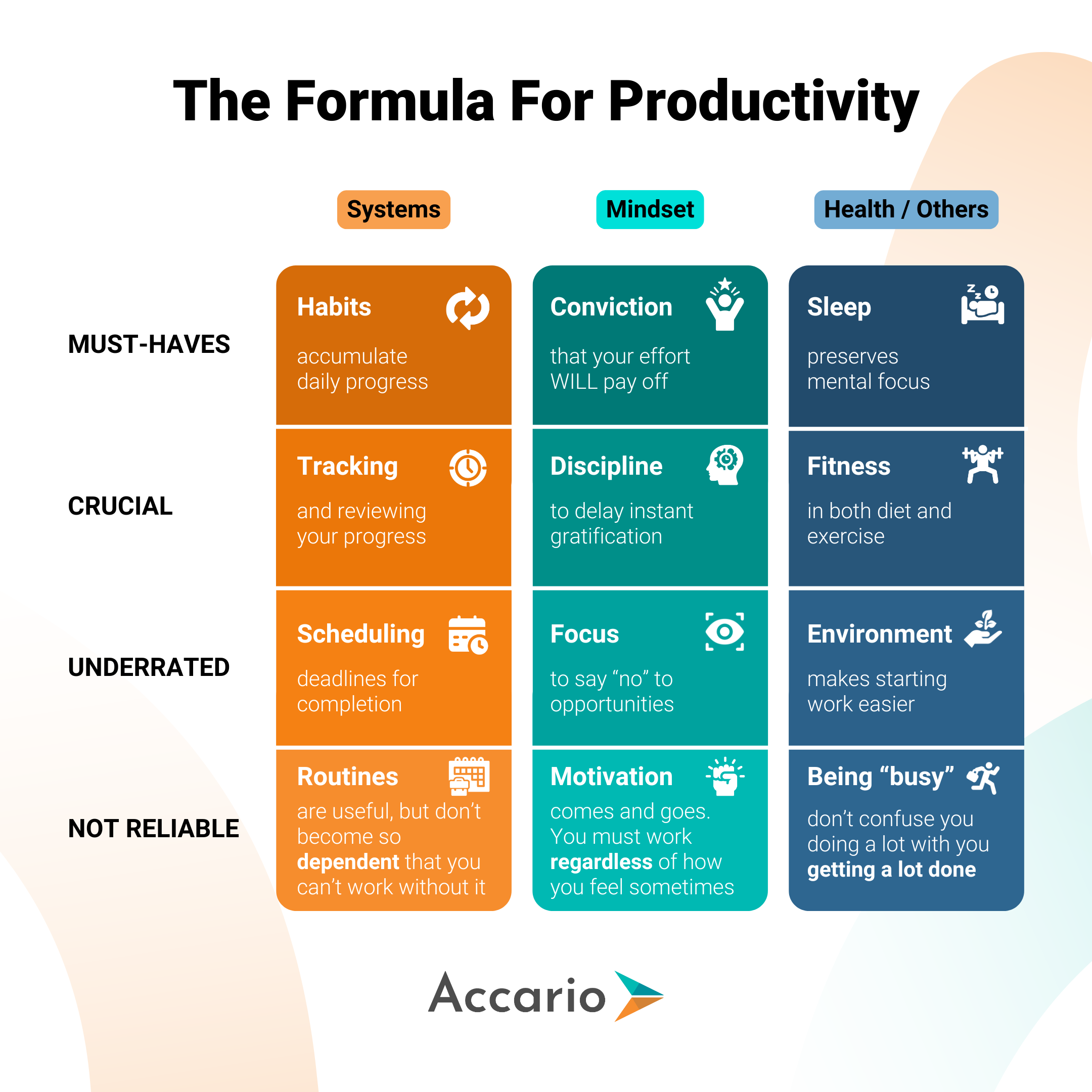
Surrounded by constant notifications, packed calendars, and hustle culture, many people misunderstand productivity. Many people work long hours, stay busy all day, and still feel like they are falling behind. The problem is not effort, it is direction.
Productivity is not about doing more. It is about consistently moving the right work forward. And that requires more than motivation or techniques. It requires a balanced combination of systems, mindset, and health. When these elements work together, productivity becomes repeatable rather than exhausting.
This idea forms the basis of the formula for a productivity framework.
The must-haves: your foundation for progress
Every productive system rests on a small number of non-negotiables. Without them, progress becomes weak and inconsistent.
Habits
Productivity is rarely the result of occasional surges of effort. It is the outcome of small actions repeated daily. Habits reduce reliance on willpower by turning important work into routine behaviour. When people build progress into daily systems, momentum continues even on low-energy days.
Conviction
Conviction is the belief that your effort will pay off, even when results are not immediately visible. Without it, people tend to abandon projects at the first sign of friction. Productivity depends on trusting the process long enough for compounding effects to take hold.
Sleep
Sleep is one of the most underestimated productivity techniques. Adequate rest preserves focus, improves decision-making, and supports emotional regulation. Without sleep, even the best systems break down. People cannot maintain productivity when they are exhausted.
The crucial elements: staying consistent over time
Once the foundation is in place, productivity depends on staying aligned and making adjustments as needed.
Tracking
What gets measured gets managed. Tracking progress makes improvement visible and highlights issues early. Reviewing work regularly enables people to make timely adjustments, rather than drifting off track for weeks or months.
Discipline
Discipline is not about intensity. It is about consistency. It is the ability to delay short-term ease in favour of long-term outcomes. Productivity improves when people let priorities guide their decisions rather than impulses.
Fitness
Your physical energy affects productivity just as much as your mental focus. Regular movement and a balanced diet support consistent energy and concentration. Over time, neglecting your physical health reduces how well your brain works, no matter how skilled or motivated you are.
The underrated drivers: where real impact lives
High performers focus less on working harder and more on creating conditions that help progress happen more easily.
Scheduling
Work expands to fill the time available. Setting clear deadlines creates focus and momentum. Scheduling transforms intentions into commitments and prevents important tasks from being endlessly postponed.
Focus
Focus is not about doing more things. It is about doing fewer things well. Saying “no” to distractions, low-value tasks, and constant interruptions protects attention for high-value work. Progress accelerates when energy is focused instead of scattered.
Environment
Environment shapes behaviour more than willpower. A workspace designed for clarity, minimal distraction, and ease of starting reduces resistance. When the environment supports focus, productivity becomes more automatic.
The not reliable zone: what to stop relying on
Many people build their productivity around methods that feel helpful but fail under pressure.
Motivation
Motivation is temporary. Changes in mood, energy, and circumstances make it rise and fall. Relying on motivation alone leads to inconsistency. Reliable productivity depends on systems that carry work forward even when motivation is low.
Routines
Routines can help, but relying on them too much can be risky. If your productivity falls apart as soon as a routine is interrupted, the system is too strict. Being flexible helps you stay consistent over the long term.
Being “busy“
Busyness is often mistaken for productivity. Activity does not equal progress. Filling a calendar or completing many small tasks can feel productive without delivering significant results. Effective productivity focuses on outcomes, not motion.
Putting the formula to work
Productivity is not a mystery or a fixed characteristic. It is a skill that can be built and improved. When you put the right systems in place, develop the right mindset, and take care of your health, productivity becomes steady instead of stressful.
Instead of chasing new methods or waiting to feel motivated, focus on the basics. Get enough sleep. Build daily habits that support progress. Plan your most important work. Cut down distractions. Set up your workspace to help you focus more easily.
When these pieces work together, productivity no longer feels like a constant struggle. The way you organise your work shapes the results you get. Productivity is not about doing more work; it is about setting things up so progress happens consistently, even on low-energy days.
Follow Us


Most Popular


Are you ready
to get your time
back?
Yes! Accario will help you
focus on your business
More smarts, more efficiencies,
with more benefits.
Accario Services