Australia’s SMSF residential property borrowing ban
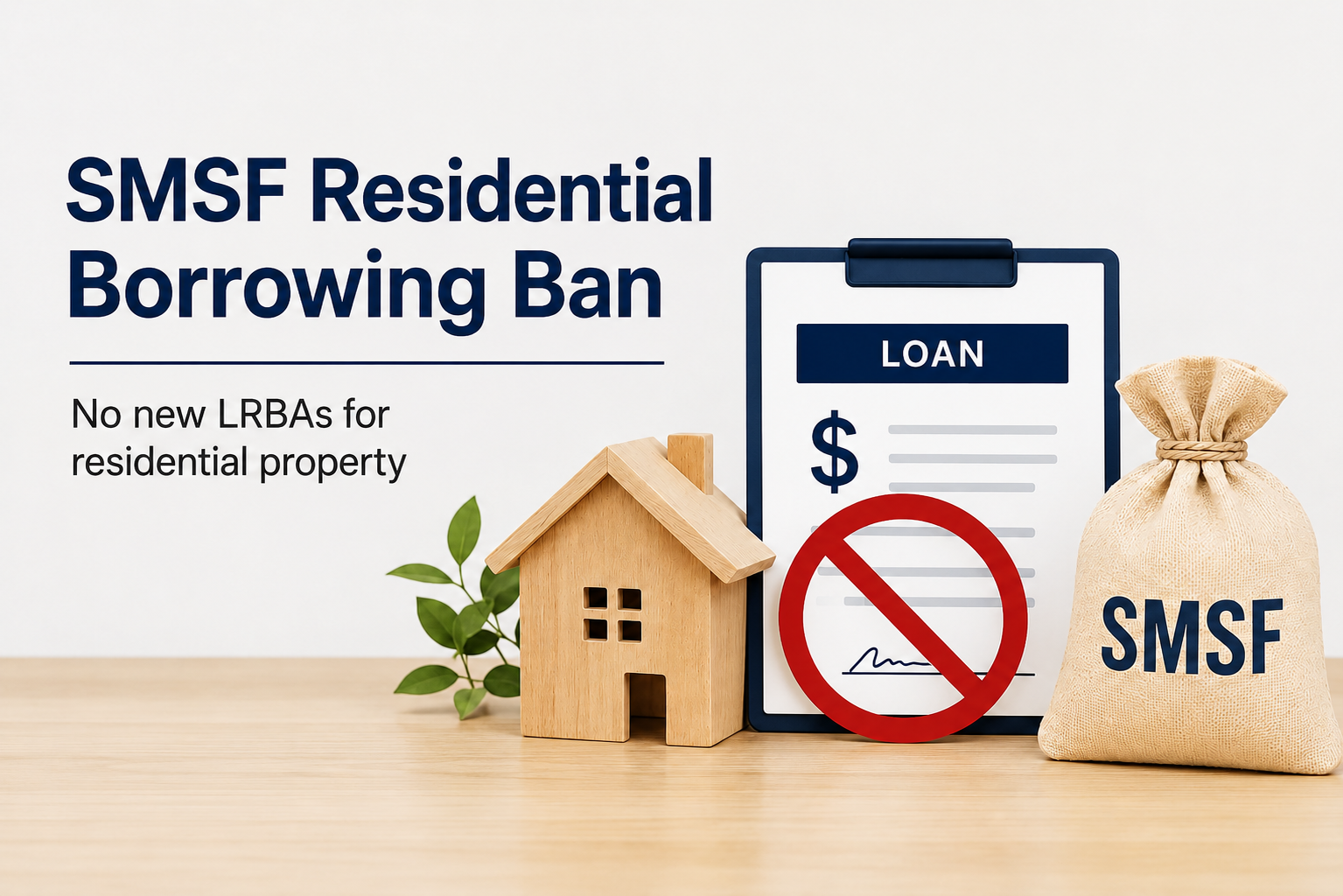
On 23rd June 2026, Australia changed its superannuation rules in a major way: Self-Managed Super Funds (SMSFs) can no longer use Limited Recourse Borrowing Arrangements (LRBAs) to buy residential property. Existing arrangements remain protected under grandfathering provisions, but the reform clearly changes how SMSFs can invest in residential real estate going forward.
Policymakers framed this change as part of broader housing affordability and tax reform. However, the underlying rationale also points to concerns about financial system stability and the risks that borrowing can create within retirement savings.
What the new law changes
The reform introduces several key adjustments to SMSF borrowing rules:
1. Ban on new residential LRBAs
From 23rd June 2026, SMSFs are no longer allowed to use borrowed funds to acquire residential property through LRBAs.
2. Grandfathering of existing arrangements
Any residential property loans already in place remain valid. SMSFs are not required to unwind existing borrowing structures.
3. Commercial property unaffected
SMSFs can continue to borrow for business real property, such as warehouses, offices, and other commercial assets.
4. Transitional protection period
Contracts signed before the commencement date are protected, with a 45-day grace period provided for transactions already in progress.
Why the ban was introduced
The policy has been justified through two main narratives: housing affordability and financial system safety. While both are part of the public discussion, they reflect different priorities.
1. Housing affordability rationale
Policymakers, including the Albanese government and the Greens, have framed the reform as part of an effort to improve housing affordability and rebalance generational inequities in the property market.
Under this view, SMSFs have been used by higher-wealth individuals to leverage tax concessions in order to invest in residential property, potentially contributing, at the margins, to increased demand and affordability pressures.
2. Financial stability rationale
A deeper structural justification comes from long-standing financial policy advice. The Murray Financial System Inquiry (2014) recommended banning SMSF borrowing due to concerns about:
- Over-leveraging retirement savings
- Increased financial risk exposure for individuals
- Potential systemic risks linked to bank lending and property cycles
This reform is widely seen as the delayed implementation of those recommendations.
How significant is the impact on the property market?
Despite political attention, the direct market impact is expected to be limited.
- SMSFs account for less than 1% of total residential property borrowing
- They represent less than 0.5% of new residential loans annually
Because of this small footprint, the policy is unlikely to significantly shift housing prices or overall demand conditions.
Instead, its significance lies more in regulatory direction than market disruption.
Competing interpretations of policy intent
The reform can be understood through three overlapping lenses:
| Policy Argument | Supporting Logic | Relative Weight |
|---|---|---|
| Controlling property prices | Politically framed as helping affordability and reducing speculative demand | Weak |
| Financial system stability | Longstanding recommendation from Murray Inquiry; concern about retirement savings risk | Strong |
| Tax fairness | Aligns with broader reforms (negative gearing, CGT changes, $3m super tax) | Moderate |
While affordability is the most visible political framing, the stability argument carries the strongest institutional foundation.
Implications for SMSF investors
The change reshapes how SMSFs may approach investment strategy going forward:
1. Reduced role of residential property investment
SMSFs can no longer rely on borrowed funds to expand residential property exposure, reducing the appeal of this strategy.
2. Existing investors remain protected
Those already holding residential LRBAs retain their arrangements under grandfathering provisions.
3. Continued access to commercial property leverage
Borrowing remains available for business real property, potentially shifting SMSF interest toward commercial assets.
4. Broader policy signal
The reform reflects a broader direction in superannuation policy: tightening rules around perceived tax advantages and speculative investment structures.
The 2026 SMSF borrowing reform represents a targeted but symbolically important shift in Australian superannuation regulation. While framed publicly around housing affordability, its practical effect on the property market is likely minimal given the small scale of SMSF residential lending.
More fundamentally, the policy reflects a regulatory preference for reducing leverage within retirement savings structures and reinforcing superannuation’s core purpose: long-term wealth accumulation rather than property speculation.
The result is a clearer boundary between investment strategy and retirement security, especially for SMSFs that previously relied on borrowing to build residential property portfolios.
How Accario supports SMSF compliance
The SMSF residential property LRBA ban requires trustees to follow updated regulatory rules. Existing arrangements remain valid, while new residential borrowing is no longer allowed. Commercial borrowing continues under current rules, with transitional provisions applying to contracts already in progress.
We, at Accario support SMSF trustees and administrators by delivering end-to-end SMSF administration, accounting, and audit support, helping deliver compliant, efficient, and well-managed SMSF services.
Our SMSF services include:
- SMSF administration and annual financial statement preparation
- SMSF compliance documentation and annual reporting
- SMSF audit coordination and support through an independent ASIC-registered SMSF auditor
- Trust deed setup and fund establishment assistance
- Daily transaction processing, electronic workpaper preparation, and reconciliations
- Software conversions and catch-up compliance for prior years
- Reviewing funds against current SMSF legislation and preparing compliance documentation to help maintain compliance
With these services, we help accounting firms reduce compliance workloads, improve turnaround times, and maintain accurate, audit-ready SMSF records.
Stay ahead of regulatory change and ensure your SMSF is structured, administered, and reported correctly.
Contact us today to learn how we can support your SMSF administration needs.
Follow Us


Most Popular


Are you ready
to get your time
back?
Yes! Accario will help you
focus on your business
More smarts, more efficiencies,
with more benefits.