A simple problem-solving process for continuous improvement
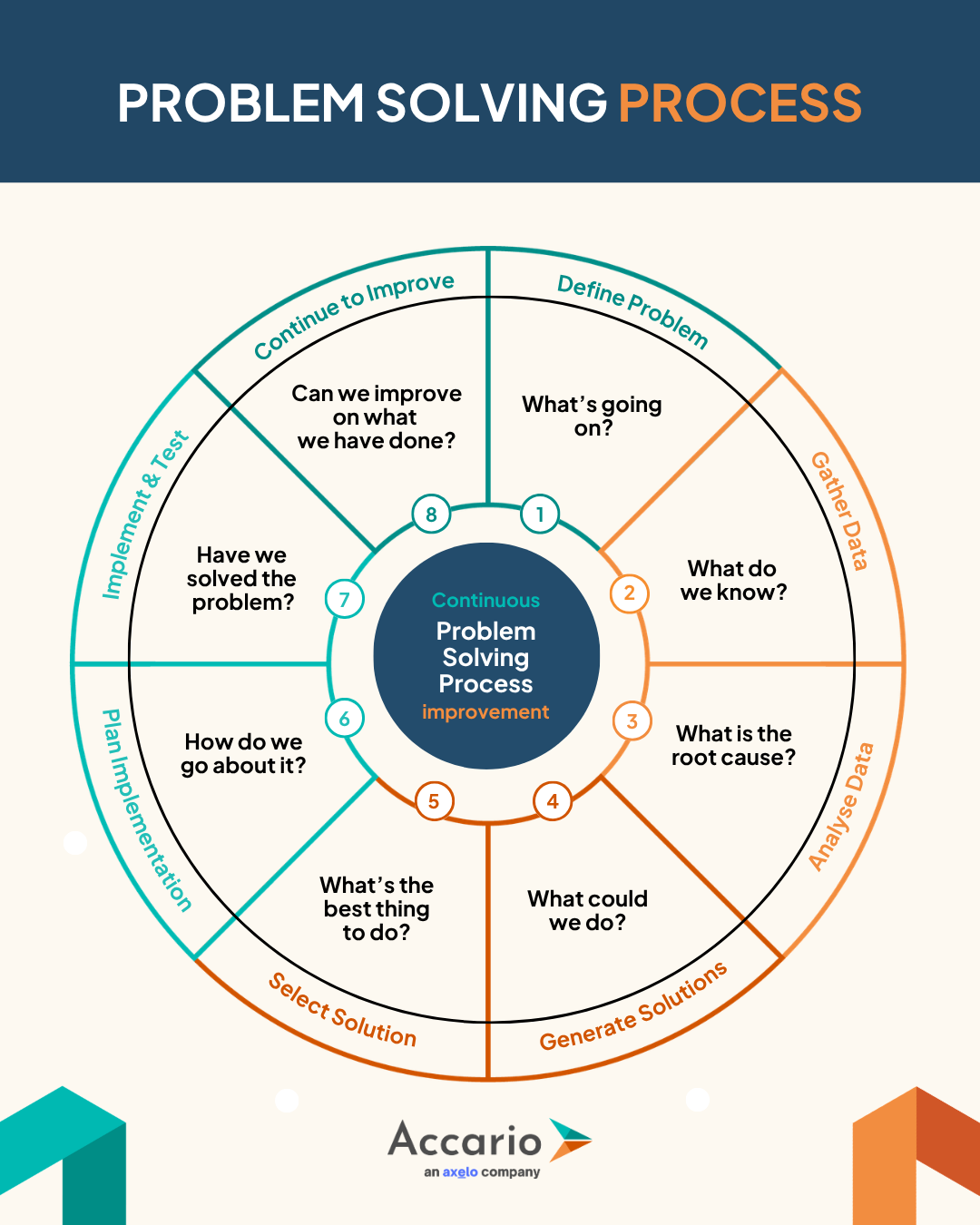
Problems are part of every business.
A process may take longer than expected. Errors may keep appearing. A team may struggle with an inefficient workflow. Or a small operational issue may continue to create unnecessary work.
The challenge is not simply identifying that a problem exists. It is understanding why it is happening and what should be done about it.
Without a structured approach, businesses can move too quickly from problem to solution. A quick fix may address the immediate issue, but if the underlying cause remains, the same problem can return.
A continuous problem-solving process provides a more practical approach. It breaks problem-solving into eight clear steps, helping teams understand the issue, make informed decisions, implement improvements and review the results.
1. Define the problem
The first step is to clearly understand what is going on.
Instead of starting with assumptions, define the problem as specifically as possible. What is happening? Where is it happening? Who or what is affected? How often does it occur?
For example, saying “our reporting process is inefficient” is broad. Saying “monthly reports are regularly completed three days after the agreed deadline” gives the team a specific issue to investigate.
A clearly defined problem creates a stronger starting point for everything that follows.
2. Gather data
Once the problem is clear, the next step is to understand what you already know.
Gather relevant information about the issue. This could include process data, reports, error records, timelines, feedback or observations from the people involved.
The goal is to separate facts from assumptions.
Good data can show when the problem started, how frequently it happens and whether there are patterns that may not have been obvious at first.
3. Analyse the root cause
Knowing what is happening is different from knowing why it is happening.
Root cause analysis helps teams look beyond the visible problem and identify the factors contributing to it.
A reporting delay, for example, may appear to be a workload problem. Further investigation might show that information is arriving late, responsibilities are unclear or too many manual steps are involved.
Addressing the root cause gives the business a better chance of creating a lasting improvement rather than a temporary fix.
4. Generate possible solutions
Once the causes are understood, ask a simple question: What could we do?
At this stage, teams should consider several possible solutions rather than immediately choosing the first idea.
Different solutions may involve changing a process, improving communication, automating repetitive tasks, adjusting responsibilities or introducing better controls.
Considering multiple options creates an opportunity to find a solution that is practical and appropriate for the business.
5. Select the best solution
The next question is: What is the best thing to do?
Not every possible solution will be suitable. Teams need to consider factors such as cost, time, available resources, risks and the likely impact of each option.
The best solution is not necessarily the most complicated one. Often, a simple process improvement can make a meaningful difference.
The objective is to select an approach that addresses the root cause and can realistically be implemented.
6. Plan the implementation
A good idea only creates value when it is put into action effectively.
Before making the change, establish a clear implementation plan. Determine what needs to happen, who is responsible, what resources are required and how progress will be measured.
Clear responsibilities are particularly important. When everyone understands their role, it becomes easier to keep the improvement moving and identify any issues during implementation.
7. Implement and test
The solution can now be put into practice.
Where appropriate, businesses can test the change before applying it more broadly. This provides an opportunity to identify unexpected problems and make adjustments.
It is also important to monitor the results. Has the original problem improved? Are there fewer errors? Is the process faster or easier to manage?
Implementation should be measured against the problem identified at the beginning.
8. Continue to improve
Problem-solving should not end when a solution works.
The final step is to ask: Can we improve on what we have done?
Processes, technology, teams and business requirements change over time. A solution that works well today may need to be adjusted in the future.
Regularly reviewing improvements helps businesses identify new opportunities and prevent processes from becoming inefficient again.
This is what makes the approach continuous. The end of one improvement can become the starting point for the next.
Building a culture of continuous improvement
Effective problem-solving does not need to be complicated.
A structured process helps businesses move away from reacting to problems and towards understanding them. By defining the issue, using reliable information, identifying root causes, considering solutions and reviewing the results, teams can make more informed improvements.
Most importantly, continuous improvement encourages businesses to keep asking questions.
What is happening? Why is it happening? What can we do better?
When those questions become part of everyday operations, problem-solving becomes more than fixing what has gone wrong. It becomes a practical way to build better, more efficient ways of working.
Follow Us


Most Popular


Are you ready
to get your time
back?
Yes! Accario will help you
focus on your business
More smarts, more efficiencies,
with more benefits.