Revenue is growing. So why does cash still feel tight?
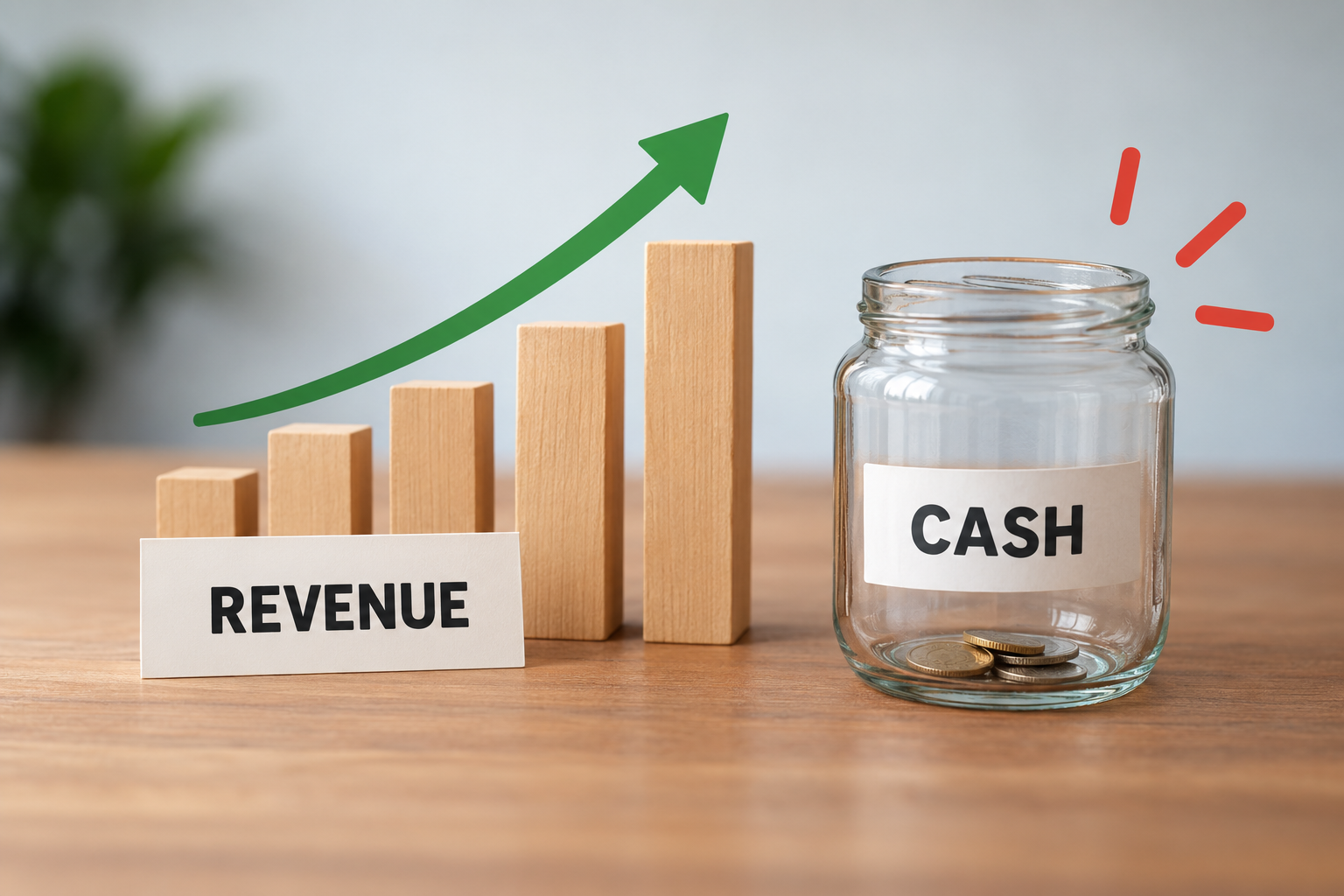
Revenue is growing. The business is earning more.
So why can cash still feel tight?
For many growing businesses, the answer comes down to timing. Revenue may increase, but the business may not receive that income at the same time it needs to pay its expenses.
A business can therefore report higher revenue and even make a profit while still having limited cash available.
The issue is not always how much the business earns. It can also come down to when income is received and when expenses need to be paid.
More revenue does not always mean more cash
Revenue and cash are not the same thing.
A business can recognise revenue when it earns income, even if it has not received the payment yet.
For example, a business may issue $50,000 in invoices in September with 30-day payment terms. The business can record the revenue in September, but it may not receive the $50,000 until October.
During September, the business still needs to meet its regular financial commitments.
This creates a gap between revenue and cash.
As revenue increases, this gap can become larger if the business does not closely monitor outstanding invoices and expected payments.
Outstanding invoices can put pressure on cash
Accounts receivable plays an important role in cash-flow management.
When a business issues an invoice, the amount becomes money owed to the business. Until the invoice is paid, that money is not available to cover expenses.
For example, if a business has $200,000 in outstanding invoices, it may have earned that income but still have less cash available than its revenue figures suggest.
Businesses therefore need to regularly review:
- How much remains outstanding
- How long invoices have been unpaid
- When payments are expected
- Which invoices require follow-up
- How expected collections compare with upcoming expenses
Accurate accounts receivable records help management understand when income is likely to reach the bank account.
Expenses continue even when payments are delayed
The business still needs to meet its financial commitments while it waits for outstanding invoices to be paid.
Payroll, rent, software, tax payments, loan repayments and other operating expenses all require cash.
This creates a simple financial challenge:
Money may come into the business later than it needs to go out.
If management does not monitor this timing, the business can face cash pressure even when revenue continues to grow.
The answer is not always to generate more revenue. Management also needs to understand when income is expected and when payments are due.
Profit does not show the full cash position
Profit and cash flow provide different information.
A profit and loss statement shows revenue and expenses over a specific period. Cash flow focuses on when money actually enters and leaves the business.
This means a profitable business can still experience cash pressure.
For example, a business may report a profit because it has recognised revenue from invoices that have not yet been paid. At the same time, it may need to pay payroll, tax or other expenses before receiving that income.
Looking only at profit can therefore hide a potential cash-flow problem.
Business owners need to review both profitability and cash flow to understand the full financial position of the business.
Expenses need to be planned alongside revenue
Revenue growth can also lead to higher operating costs.
A business may increase its payroll, technology costs, marketing expenditure or other operating expenses as it grows.
These costs may support future growth, but management needs to understand how they will affect cash.
For example, if a business plans to increase its monthly payroll, it should consider whether expected cash receipts will cover the additional expense.
This is where budgeting becomes important.
A budget helps management plan expected income and expenses. A cash-flow forecast provides a more specific view of when the business expects to receive money and when it expects to make payments.
Together, they can help identify potential cash pressure before it becomes urgent.
A cash-flow forecast helps businesses look ahead
A cash-flow forecast gives management a forward view of expected cash movements.
It can include expected receipts from outstanding invoices and planned payments such as payroll, tax, rent and other business expenses.
For example, a forecast may show that the business expects $100,000 in cash receipts next month but has $130,000 in expected payments.
That $30,000 difference gives management an opportunity to review the position before the shortfall occurs.
Without a forecast, management may only become aware of the problem when available cash starts to fall.
Regular forecasting allows businesses to identify these gaps earlier and make decisions based on reliable financial information.
Accurate bookkeeping supports better cash management
Cash-flow management depends on accurate financial records.
If bookkeeping is delayed or records contain errors, management may not have an accurate view of outstanding invoices, expenses, bank balances or upcoming payments.
Regular bookkeeping and bank reconciliations help keep financial records accurate and up to date.
Accounts receivable and accounts payable records also help show what the business expects to receive and what it needs to pay.
This information gives management a better view of its current financial position and supports more informed cash-flow planning.
Financial reporting turns numbers into useful information
Bookkeeping records the financial activity of a business. Regular financial reporting helps management understand what those numbers mean.
Management reports can show changes in revenue, expenses, profit, outstanding invoices and other key financial measures.
Instead of reviewing individual transactions, business owners can use regular reports to identify changes and areas that need attention.
For example, if revenue continues to increase while outstanding invoices also increase, management can investigate whether income is being collected quickly enough to meet upcoming expenses.
The numbers become more useful when businesses review them regularly and use them to guide financial decisions.
Revenue growth needs financial planning
Revenue growth is positive, but it does not guarantee that the business will have enough cash to cover upcoming expenses.
If revenue increases while outstanding invoices and expenses also increase, management needs to understand how these changes will affect available cash.
This is why businesses should not look at revenue alone.
They should also review:
- How much income remains outstanding
- When expected payments will arrive
- What expenses are due
- How expenses are changing
- How much cash the business expects to have in the coming months
- Whether planned spending fits the expected cash position
These checks can help management identify potential cash pressure before it becomes urgent.
Better financial information supports better decisions
Cash-flow problems become harder to manage when financial information is incomplete, delayed or difficult to understand.
Businesses need accurate bookkeeping, regular bank reconciliations, timely financial reporting and cash-flow forecasts to track income, expenses, outstanding invoices and upcoming payments.
This allows management to move beyond simply asking whether revenue has increased.
The more important question is:
Is the business receiving enough cash, at the right time, to meet its financial commitments?
That is a question revenue alone cannot answer.
Making cash management easier
At Accario, we support businesses with bookkeeping, accounting, financial reporting and SMSF services. Our bookkeeping support includes processing payroll, bank reconciliations, accounts receivable and accounts payable, helping businesses maintain accurate and up-to-date financial records.
Our accounting and Virtual CFO services can also support budgeting, forecasting, cash-flow planning, KPI analysis and management reporting.
This gives business owners access to reliable financial information they can use to understand their current position, plan ahead and make informed decisions.
Revenue growth is important. But revenue alone does not tell you how much cash is available.
The real goal is to make sure the cash coming into the business can support its financial commitments when they fall due.
Is your revenue growing, but your cash still feels tight? Do not wait until cash-flow pressure becomes difficult to manage. Accario can support your bookkeeping, reporting and forecasting needs, helping you understand your numbers and plan ahead.
Contact us today to discuss how we can support your business.
Follow Us


Most Popular


Are you ready
to get your time
back?
Yes! Accario will help you
focus on your business
More smarts, more efficiencies,
with more benefits.